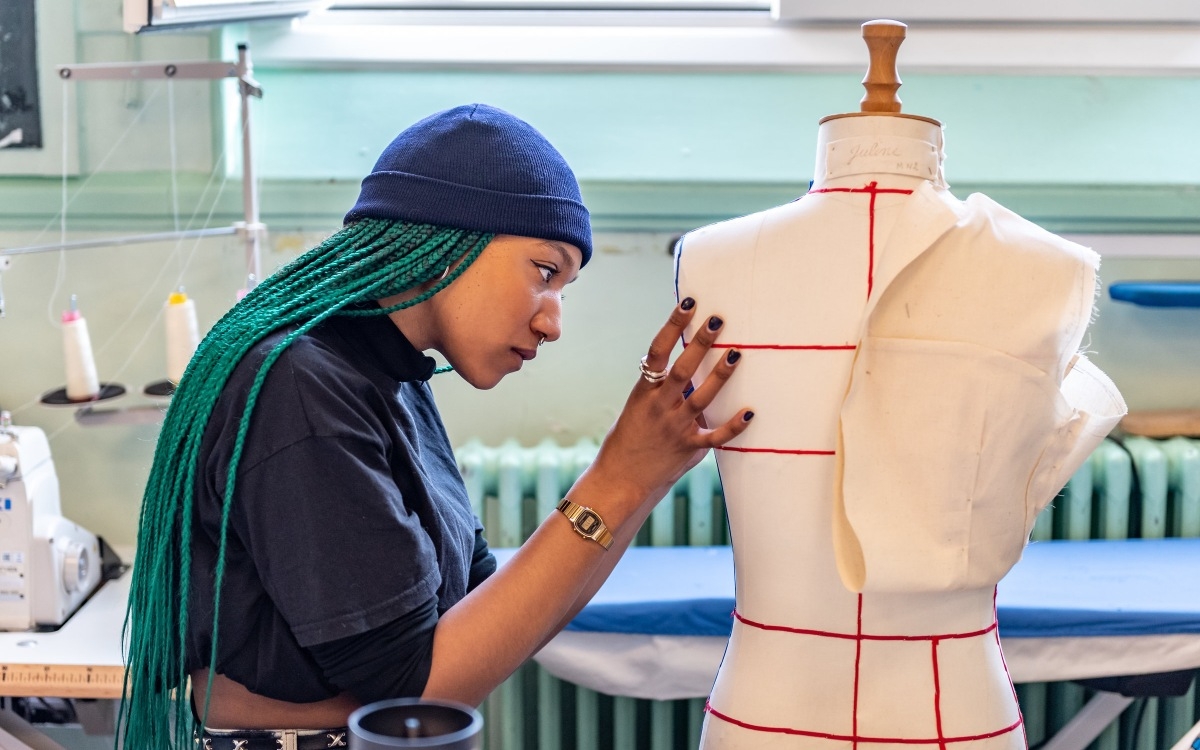
The Paris Adult Education Service (SCAP) offers more than 640 courses and operates in 130 Parisian elementary and middle schools, whether the courses are designed to support career goals or to broaden one’s knowledge.
Who can register?
The Paris Adult Education Courses (CAP) are open to anyone over the age of 18, whether they live in Paris or not, subject to availability.
What? Discover the five training areas
A wide range of training programs in 13 professional fields
Courses may be offered on an annual, semester-long, or intensive basis, in person or online, with or without assessments.
The City of Paris Adult Education Program offers a wide range of courses in 13 professional fields.
We offer five types of professional training programs designed to help you advance your career, change direction, or start fresh!
- Preparation courses for state certification exams and civil service entrance exams
- Certification courses that allow you to demonstrate your technical skills
- Certified open-badge training courses that grant you access to a digital certification, giving your skills greater visibility, allowing you to share them on social media, and making them recognizable to companies that can endorse them
- Career paths that allow you to develop or further your career goals
- New for 2025 – an initiative to raise awareness of soft skills: Training programs that include awareness-building on soft skills — an essential tool for adapting, collaborating, innovating, managing… and simply moving forward.
Some examples of soft skills:
- Creativity: the ability to imagine and implement new solutions that go beyond conventional norms.
- Negotiation: the ability to balance one's own interests with those of others in order to resolve a situation.
- Time management: the ability to estimate, organize, plan, and track time.
- Emotional intelligence: the ability to identify, understand, and manage one’s own emotions and those of others.
The goal of these training sessions is to help you develop these essential skills, better identify them, make the most of them… and put them into practice, both in your professional life and in your personal projects!
This CAP initiative reflects the changing demands of the job market, particularly in terms of recognizing these skills, which are increasingly sought after by recruiters
When should I register for courses in the 2025–2026 academic year?
There are several registration periods throughout the school year. You can register for Adult Education courses only during one of these registration periods.
2025–2026 Registration Schedule
| Course dates | Registration period | Processing of requests | Start of classes |
|---|---|---|---|
| Annual training and first semester | from Monday, August 18 (10 a.m.) through Monday, September 8, 2025 (midnight) | from Monday, September 9, to Friday, September 26, 2025, inclusive |
Classes begin Monday, September 26, 2025 |
| Courses for the second semester | Tuesday, January 6 through Monday, January 26, 2026 | from Tuesday, January 27 through Friday, February 6, 2026 | Classes begin on Monday, February 9, 2026 |
Annual training and first semester
- Registration period
- from Monday, August 18 (10 a.m.) through Monday, September 8, 2025 (midnight)
- Processing of requests
- from Monday, September 9, to Friday, September 26, 2025, inclusive
- Start of classes
- Classes begin
Monday, September 26, 2025
Courses for the second semester
- Registration period
- Tuesday, January 6 through Monday, January 26, 2026
- Processing of requests
- from Tuesday, January 27 through Friday, February 6, 2026
- Start of classes
- Classes begin on Monday, February 9, 2026
Rates
Training course fees range from €50 to €350, depending on their duration or specific focus.
Recipients of RSA, ASS, or AAH benefits are eligible for a 50% discount upon presentation of a document bearing their name that is less than three months old.
The FOF and FOA French courses, designed for adults with little or no formal education in their home countries, are free of charge.
All rates are available in the brochure below:
How do I enroll in the Paris Adult Education Courses?
To register, you must use your Parisian account or create one to access the Paris Adult Education website:
- I'm accessing the training catalog
- I'm choosing my course
- I create (or log in to) my "Mon Paris" account
- I'm updating (if necessary) my "Cours d'Adultes de Paris" profile
- I confirm my application in the "My Applications and Payments" tab
- I can submit up to three applications at the same time, but only one application per day and time slot
- I receive a confirmation email; I can cancel my request until the end of the registration period
- I will receive a response to my application via email within the timeframe indicated on the calendar
Services to help you register
The borough offices are available to assist you with the registration process.
The 3975 call center is available to answer all your questions from 8:30 a.m. to 6 p.m.
Guidance Tools for Foreign Language Training
Guidance resources for French-language programs
How do you choose a course and assess your level to take a French language course?
Here are a few tools to help you make your choice.
Training locations
See all the establishments listed by borough:
What's it like at the Paris Adult Education Center?
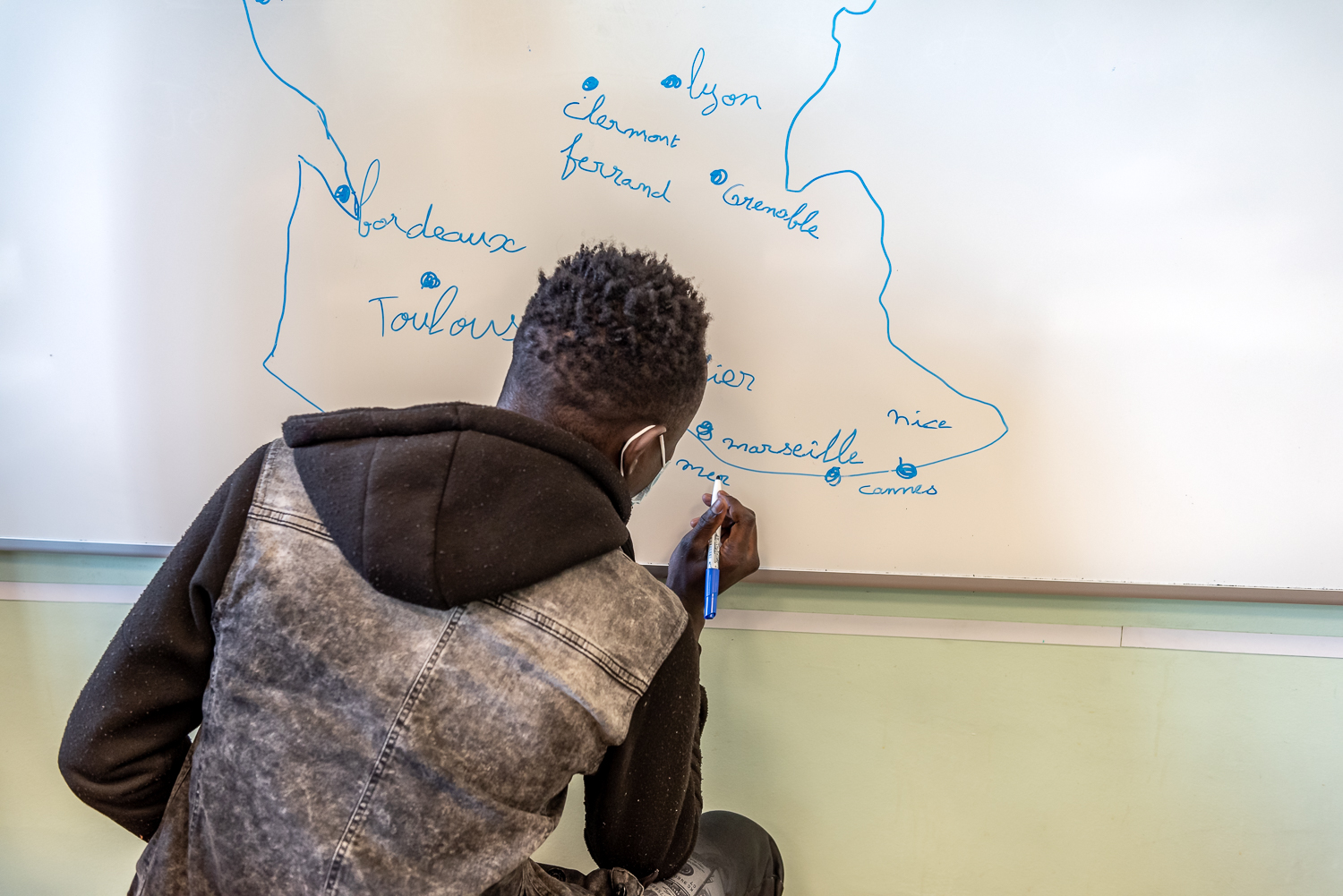
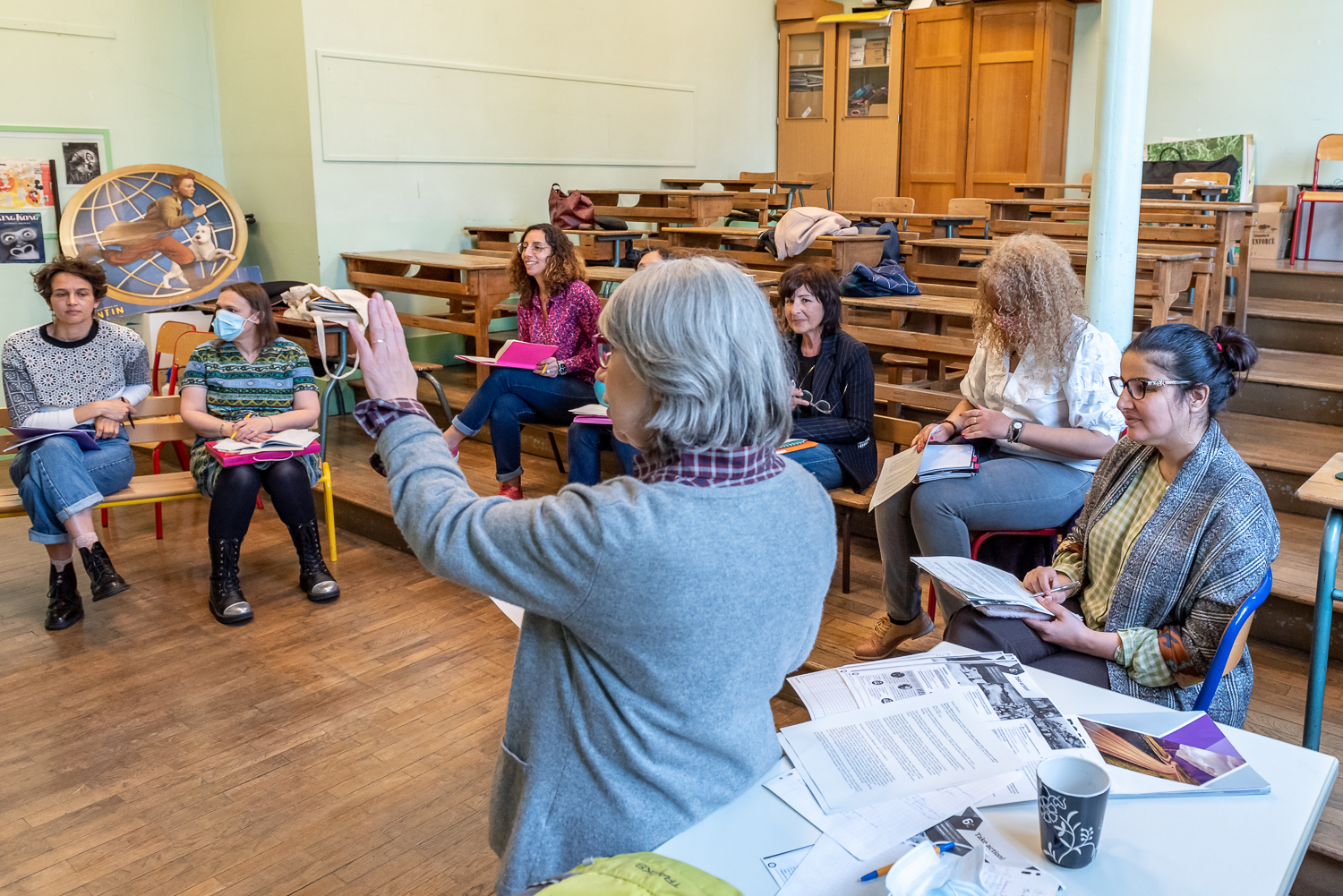
The quality of the courses offered by the Paris Adult Education Program is ensured by 850 expert instructors who teach every evening at the 140 schools and high schools where the classes are held.
All the participants in the training programs share one common trait: a desire to learn, to push themselves to acquire new knowledge, and to advance in their personal and professional lives.


Selection criteria
To ensure that all applications are treated fairly, selection criteria have been established and are applied consistently during the application review process.
CAPs are exclusively for adults aged 18 and older.
Priority is given to individuals enrolled in vocational training programs or those who have begun a training program at the Cours d'Adultes de Paris, provided they have followed the registration procedure.
The selection of candidates from among those who meet the requirements is based on:
- based on social criteria (job seekers, subsidized employment contracts)
- the candidate’s stated goals and motivation – preference is given to candidates who are on a career development path
- attendance and grades from the previous level, in the case of a course taken through the Paris Adult Education Center.
For degree programs, selection rounds will be held from Monday, September 13, through Friday, September 24.
Candidates must arrive at the institution on the date and time specified in their invitation; the date and time of the invitation cannot be changed. They will take their assessment or interview and receive their results the following week.
The Paris Adult High School
Are you interested in returning to school and preparing for the general high school diploma?
The Paris Adult High School is primarily intended for working adults or job seekers who wish to return to school.
> More information about the Paris Adult High School
Vidéo Youtube

Frequently Asked Questions and Rules and Regulations
History of Adult Education in Paris
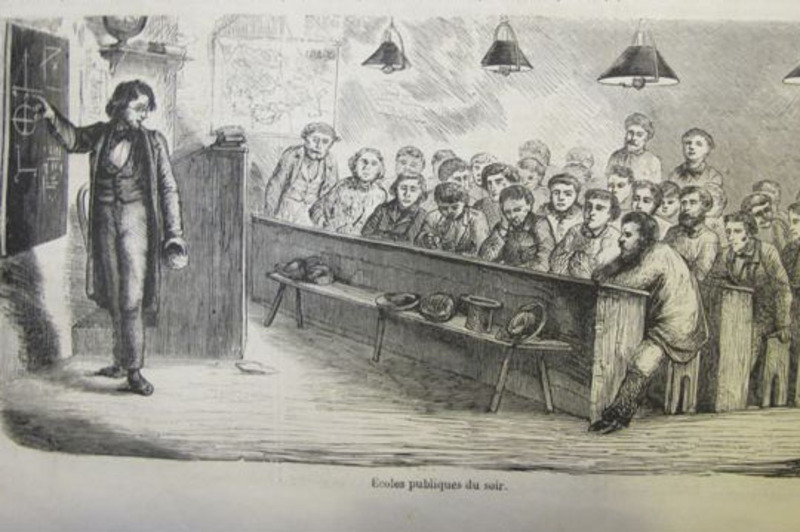
During the French Revolution, Talleyrand—inspired in part by Condorcet—drafted a report on public education, which he presented to the Constituent Assembly on September 10, 11, and 19, 1791; it was there that the benefits of adult education were extolled for the first time (in a country that was still largely illiterate). However, it was not until 1820 that the “Society for Elementary Education” was established, creating the first Adult Education Courses in Paris, including one for women.
In 1833, François Guizot, Minister of Public Instruction, secured the passage of a law on primary education that encouraged every municipality to establish an Adult Education Course, in partnership with the Academy rectors. By 1837, 117,000 students were attending courses throughout France.
The year 1872 saw the creation of the first municipal apprentice school on Boulevard de La Villette, now known as Lycée Diderot.
By the end of the 19th century, the vocational focus of the City of Paris’s Adult Education Courses was clear.
Industrialization marked a new direction for these courses toward more technical instruction, aimed at giving workers the intellectual tools to operate machinery.
After World War I, adult education courses experienced a decline across France, dropping in Paris from 17,000 in 1895 to 5,000 between 1920 and 1935.
In 1939, growing fears of conflict prompted the government to expand training; a decree authorized the Ministry of Education to create vocational training centers, and retraining centers became “accelerated vocational training centers”; vocational training was born.
Since theFifth Republic, Paris has carried on the historical legacy of adult education courses. Municipal evening classes are adapting to the diverse demands of the job market and are undergoing a gradual reorganization, the primary goal of which is to keep pace with economic and social changes so that students can better adapt to the job market.
The only constraint is the one each student sets for themselves in their quest to enhance their knowledge and achieve greater personal fulfillment in their professional and personal lives.
Today, more than 850 instructors work in the 140 schools involved on a daily basis.
From elementary schools to high schools, the Cours d'Adultes de Paris offers a wide range of educational programs in venues that are sometimes prestigious.
These buildings represent a rich architectural and cultural heritage, spread throughout the Paris region. All of these institutions are dedicated to serving the adult population of Paris.
Would you like to receive the latest news from the City of Paris? Sign up for our newsletter!
Settings Text Html