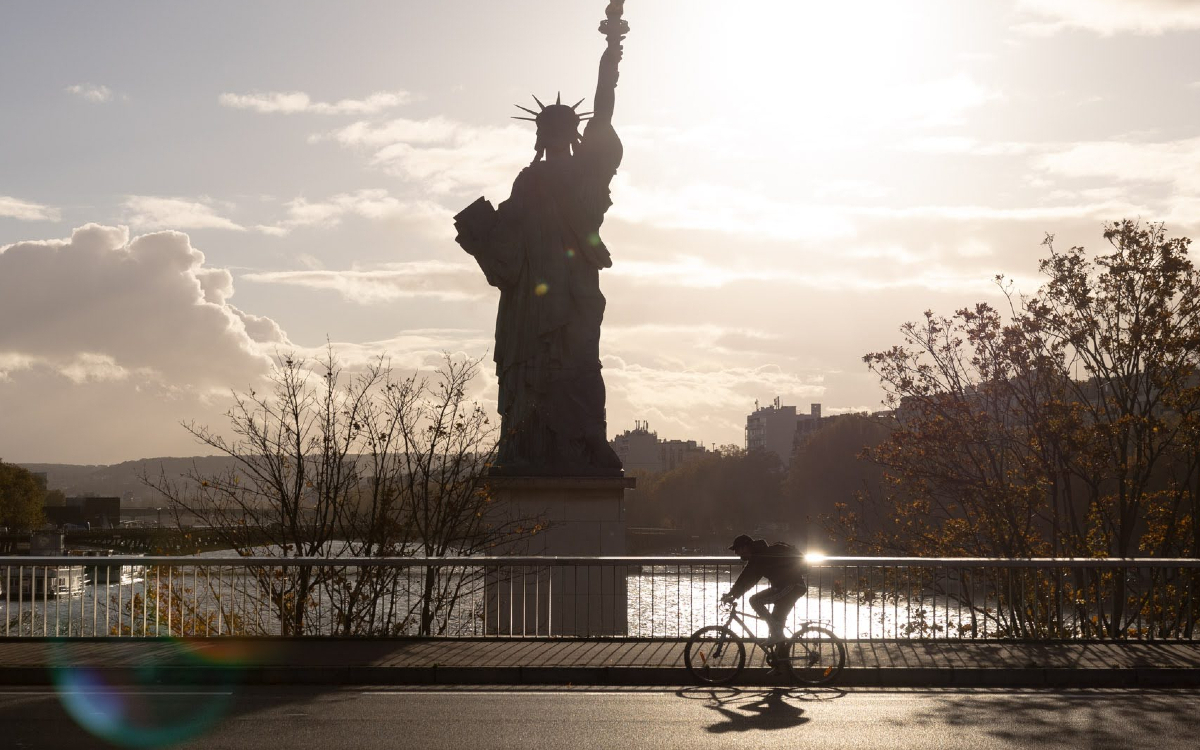
More and more Parisians and visitors are taking up cycling. This record influx of two-wheelers calls for greater vigilance. Here is a reminder of some traffic rules for safe cycling.
A "Street Code" for everyone
The Paris Council has drawn up a Street Code, voted in July 2023, to clarify the rules for sharing public space. As a reminder, municipal police officers are authorized to issue fines to cyclists who break the rules. Consult the Street Code here.
The 12 essential rules of the Street Code
Cyclists must comply with a number of rules, or face fines.
Find out everything you need to know about fines on the Road Safety website.
Mandatory equipment for your safety
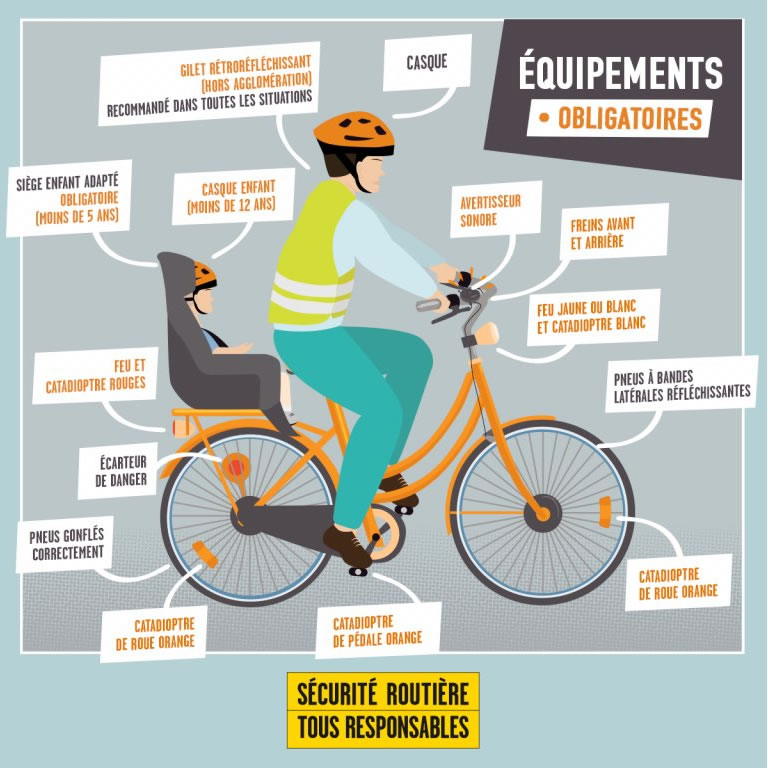
Regulations require several pieces of equipment:
- Wearing a helmet for children under 12 years of age.
- Lighting and signaling devices: one or more rear reflectors (reflective devices). Orange reflectors visible from the side, white reflector visible from the front, orange reflectors on the pedals. At night, or during the day when visibility is poor, all bicycles must be equipped with the following two lights (as well as the trailer, if necessary): a front position light emitting a non-dazzling yellow or white light, and a rear position light that must be clearly visible from behind when the bicycle is in use.
- A warning signal: all bicycles must be equipped with a warning device (bell). The sound of the bell or bell must be audible at least 50 meters away. The use of any other audible signal is prohibited.
Every bicycle can also be equipped with a hazard warning device at the rear and on the left side.
Although high-visibility vests are only mandatory outside built-up areas (when riding at night, and even during the day when visibility is poor, all cyclists and passengers must wear a high-visibility vest outside built-up areas), we also recommend that you wear one.
Before setting off, if you have taken your bike out of storage in your basement, the first thing to do is check your brakes. This may seem obvious, but it can be a lifesaver on slippery roads. Also check your tire pressure. The better your tires are inflated, the less energy you will use when riding. Fatigue causes a loss of alertness, which can lead to accidents.
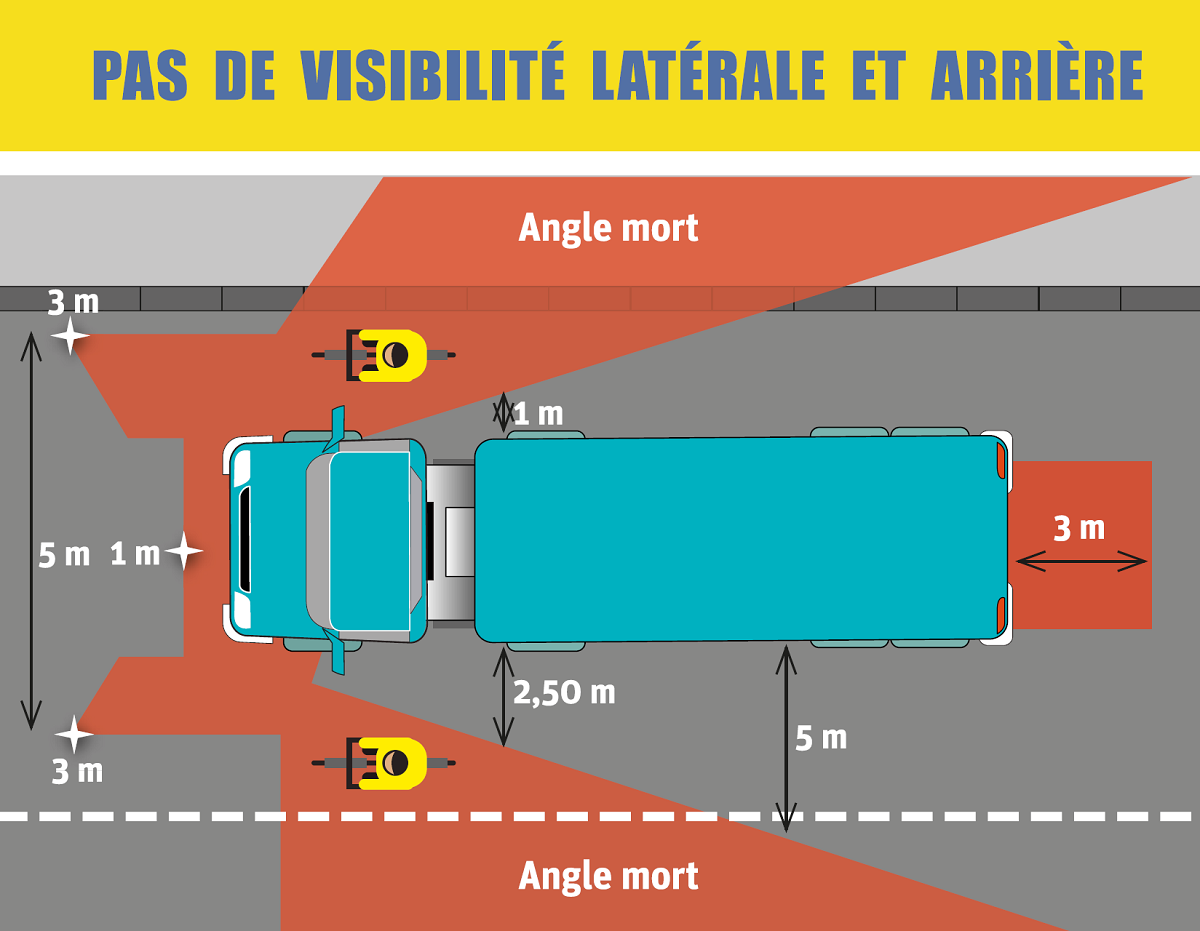
Your enemy: the blind spot of heavy trucks
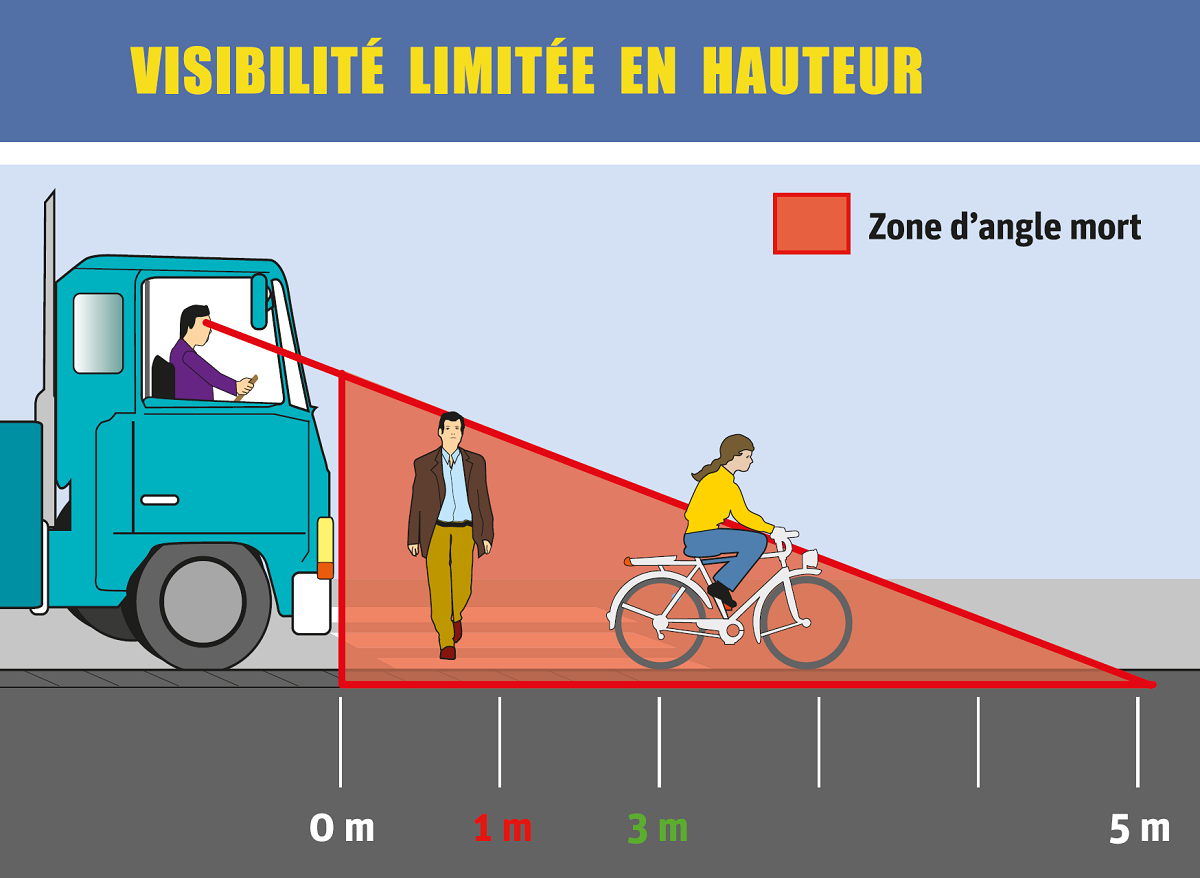
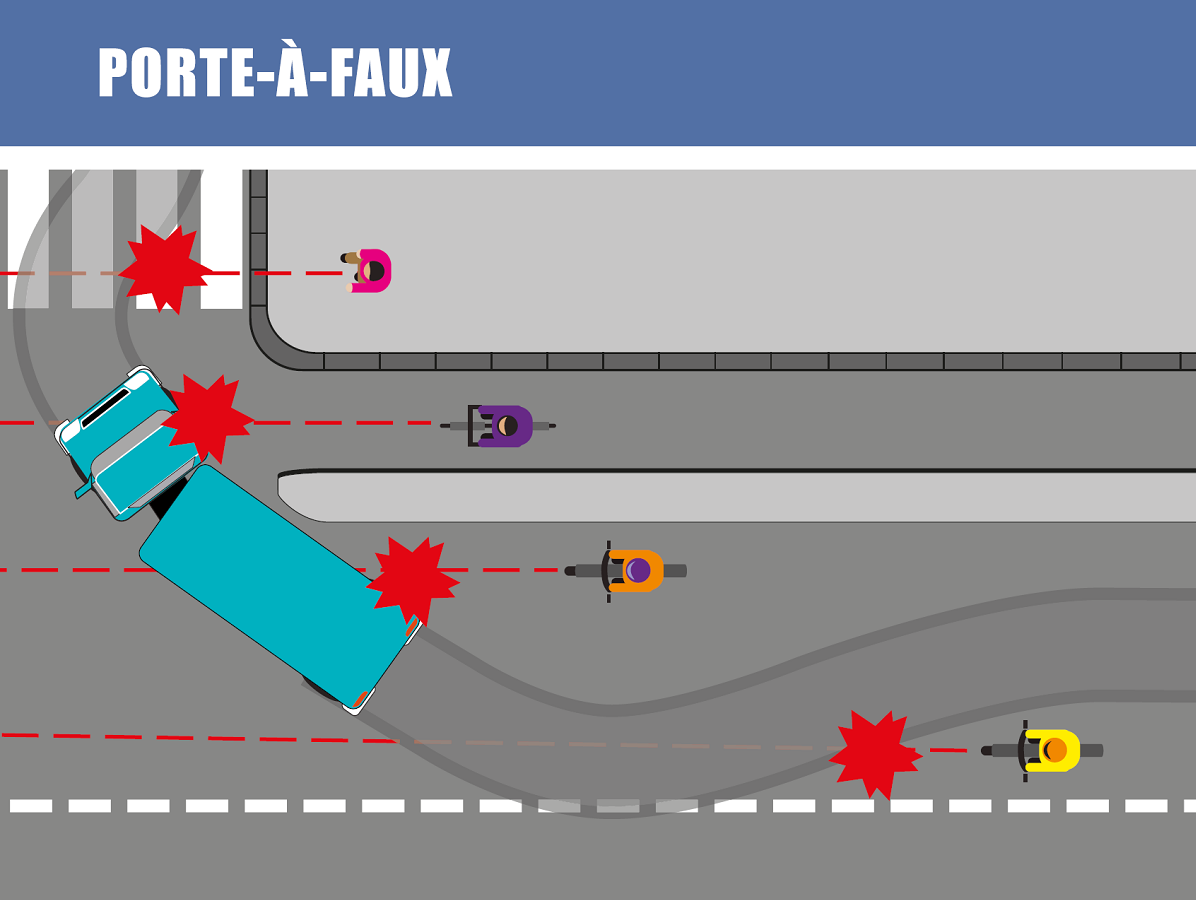
We cannot stress this enough: if you are positioned behind a heavy truck on the right-hand side, the driver cannot see you! It should be noted that nearly 40% of cyclists involved in accidents with heavy trucks were in the truck's blind spot. Also, avoid overtaking them when they are maneuvering or near an intersection, as the vehicle's overhang when turning is also a hazard.
More generally: never pass a line of vehicles on the right. Stay behind the vehicles and maintain eye contact at all times. Do not pass a bus, even if it is stopped at a station. It has right of way when it leaves a station, and you may not have time to pass it. Again, the driver may not see you.
The rules of the road are the law
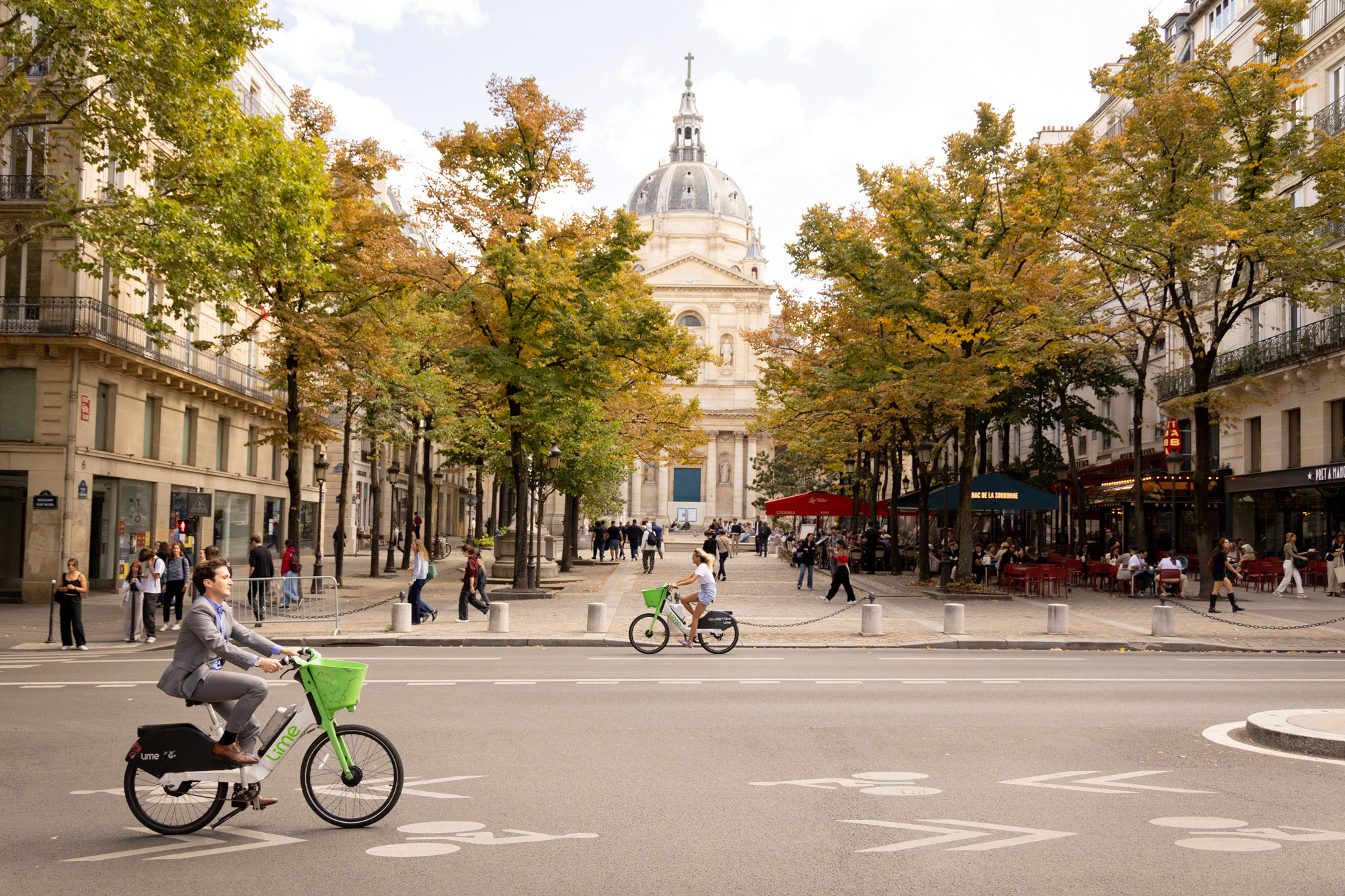
When cycling on the road, traffic rules apply. Be mindful of pedestrians, as they have the right of way when crossing at crosswalks. If necessary, alert them to your presence by ringing your bell. Do not ride on sidewalks.
Also: no headphones in your ears, no phone: they distract you while driving and you risk a fine of €135…
Also remember to signal with your arm the direction you are taking when turning at an intersection or exiting a roundabout.
Finally, red lights apply to everyone, even cyclists, unless otherwise indicated by a triangular sign, a cyclist, and an arrow indicating the direction the cyclist can take despite the red light. Always assuming that pedestrians have priority.
Motorists: be alert to cyclists riding on the road at the same time as you. Under certain conditions, you can overtake a bicycle by moving over sufficiently (at least 1 meter) to avoid hitting the cyclist. Similarly, do not approach a bicycle from the side at a distance of less than 1 meter in built-up areas.
Vidéo Youtube
Traffic signs you absolutely must know





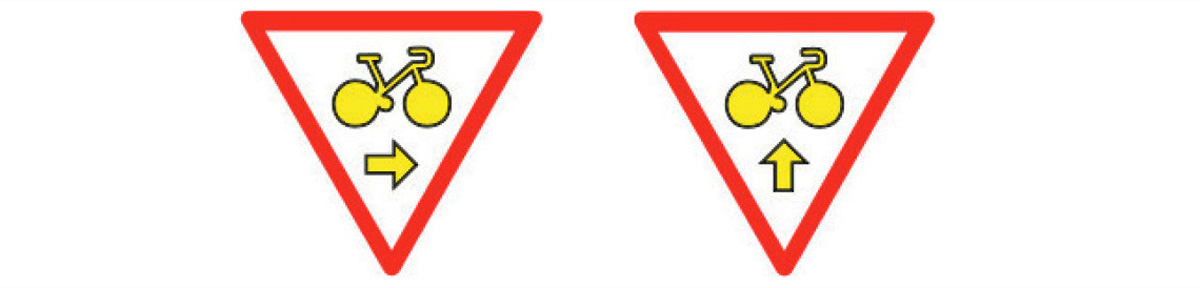
Cyclists are allowed to go through a red light to turn right or go straight ahead, after giving way to all other road users who have a green light. They must remember to signal their changes of direction in advance by extending their arm.
Settings Text Html